


What preapproval actually means
Auto loan preapproval is a conditional offer from a lender stating that, based on a review of your credit and financial information, they are willing to lend you up to a specific amount at a stated APR (annual percentage rate) for a given term. It is distinct from prequalification, which typically uses a soft credit pull and produces only an estimate. Preapproval involves a hard inquiry and gives you an actual offer you can bring to a dealer.
The offer has an expiration date, commonly 30 to 60 days depending on the lender. Within that window, you can shop for a vehicle knowing your financing terms in advance. If you are new to auto financing, the fundamentals of how auto loans work are worth reviewing before you begin.
What you will need
How to get preapproved: the steps
Follow the steps below in order. Each one feeds into the next: your credit report shapes your DTI awareness, your DTI informs the loan amount you target, and the loan amount determines which lenders are practical options.
Pull and review your credit report
Before any lender sees your file, review it yourself. You can access your reports from all three major bureaus (Equifax, Experian, and TransUnion) through AnnualCreditReport.com at no cost. Look for accounts you do not recognize, incorrect balances, or payments marked late that were actually on time. Dispute any errors directly with the bureau before you apply, because inaccuracies can push your quoted rate higher.
Calculate your debt-to-income ratio
Your debt-to-income ratio (DTI) is the share of your gross monthly income already committed to debt payments, including rent or mortgage, credit cards, student loans, and any existing car payments. Add those monthly obligations together and divide by your gross monthly income, then multiply by 100 to get a percentage. Many lenders prefer a DTI below 43% for auto loans, though standards vary. Knowing your DTI before you apply tells you whether to pay down any balances first.
Decide on a loan amount and term
Use the vehicle price range you are targeting, subtract any down payment or trade-in value, and that figure becomes your loan amount. Then choose a repayment term: common options run from 36 to 72 months. A shorter term means higher monthly payments but less total interest paid. A longer term lowers the monthly payment but increases total cost. An online loan calculator can show you exactly how the numbers shift so you apply for what you can realistically repay.
Gather your application documents
Most lenders ask for the same core set of documents. Have these ready before you start any application:
- Government-issued photo ID
- Social Security number
- Recent pay stubs (typically the last two) or, if self-employed, two years of tax returns
- Proof of residence dated within the last 60 to 90 days
- Employment information, including employer name and contact details
See the pre-application checklist for a more thorough breakdown of what each document is used for.
Submit applications to multiple lenders
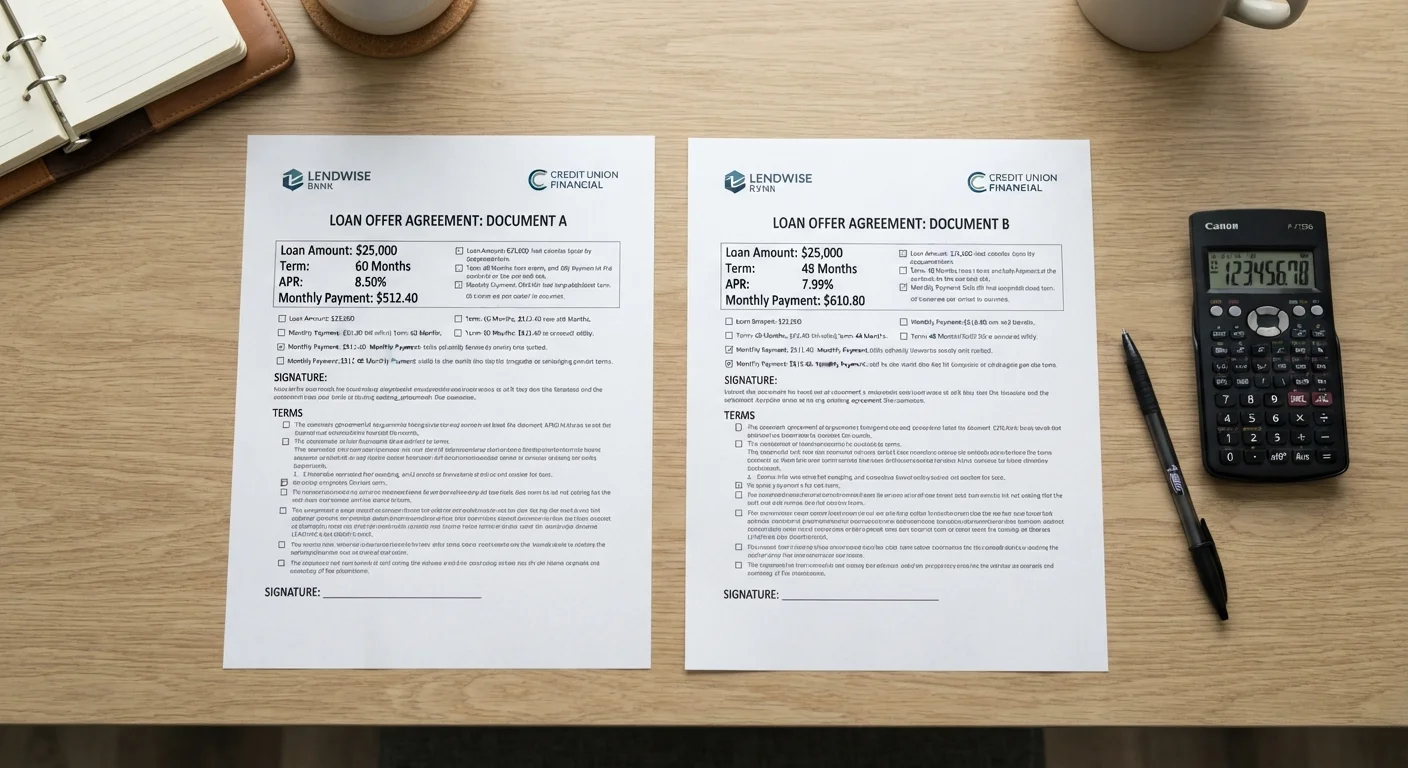
Apply to at least two lenders within a short window, ideally within 14 days. Credit scoring models generally treat multiple auto loan inquiries made in a brief period as a single inquiry to reduce the impact of rate shopping. Good sources to consider include banks where you already hold accounts, credit unions (which often have competitive rates for members), and online lenders that specialize in auto financing. Each will return a preapproval offer with a rate range, a maximum loan amount, and a term.
Compare preapproval offers
When comparing offers, look beyond the monthly payment. Compare the annual percentage rate (APR), which includes both the interest rate and any lender fees expressed as a yearly cost. Also compare the total amount you will repay over the full term. A slightly lower APR on a longer term can still cost more in total interest than a slightly higher APR on a shorter term. Choose the offer that balances an affordable monthly payment with the lowest total cost given your situation.
Use your offer at the dealership
Bring your preapproval letter (physical or digital) when you visit a dealer. Negotiate the vehicle price first, as a separate conversation from financing. Once you agree on a price, show the preapproval and ask whether the dealer can match or beat it. If the dealer's financing is worse, you already have an approved loan ready to use. After you finalize a vehicle, the lender will conduct a final verification confirming the car meets their requirements, then issue the actual loan.
Rate shopping within a short window
Applying to multiple lenders within 14 days is generally treated as one credit inquiry by FICO and VantageScore models for auto loans. Shopping around does not meaningfully harm your credit score when you do it within that window. A common misconception is that any application hurts your score significantly; the actual impact from a single hard inquiry is usually small and temporary. For more on this topic, see auto loan misconceptions explained.
What to do after you receive an offer
Once you have one or more preapproval letters, confirm how long each offer remains valid and note any vehicle restrictions, such as maximum mileage or minimum model year. Some lenders exclude certain vehicle categories, including salvage-title cars or vehicles over a set age.
If your preapproval comes back with a higher APR than you expected, review what the lender cited as the reason. Common factors include a lower credit score, a high DTI, or limited credit history. Addressing one of those before reapplying, such as paying down a credit card balance, can shift the outcome.
Preapproval is not a guaranteed loan
A preapproval offer is conditional. The lender still needs to verify the specific vehicle you choose, confirm it meets their collateral requirements (age, mileage, and title status), and do a final review of your application. If the car you select does not qualify, the lender may adjust the terms or decline to fund that particular purchase. Always confirm vehicle eligibility with the lender before finalizing a deal.
Once you have a vehicle and a final loan, you will also need to arrange insurance before you can drive it off the lot. The auto insurance overview covers what coverage types apply to financed vehicles. Buyers considering used vehicles specifically will find useful context in the used cars resource hub.
This article is for general informational purposes only and does not constitute personalized financial or legal advice. Loan terms, eligibility requirements, and lender practices vary. Consult a licensed financial professional for guidance specific to your situation.