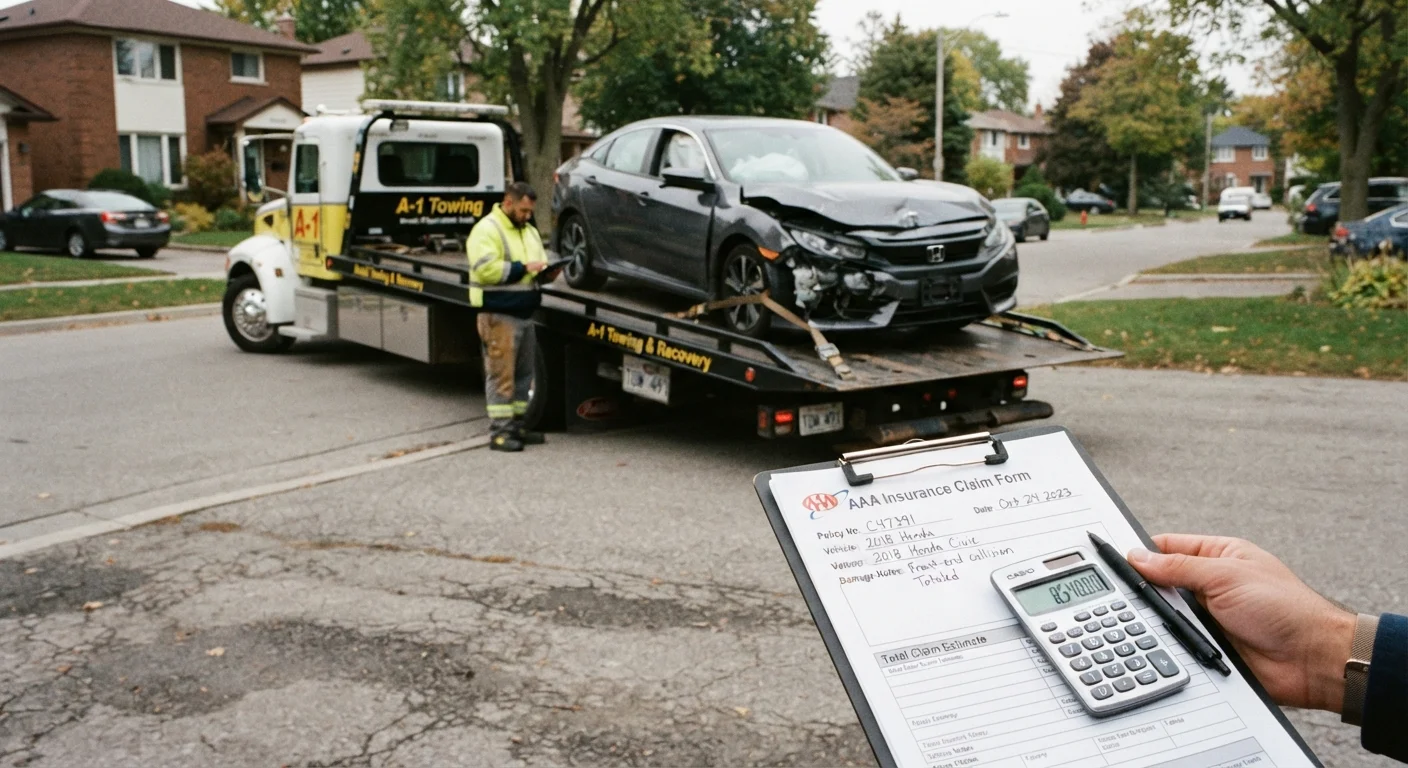


Why auto insurance exists
Auto insurance is a contract between you and an insurer. You pay a premium; the insurer agrees to cover certain financial losses defined in the policy. The core purpose is to spread the cost of accidents, theft, and vehicle damage across many policyholders so no single person faces a catastrophic bill alone.
Almost every U.S. state requires drivers to carry at least a minimum level of liability insurance before operating a vehicle on public roads. If you are buying or financing a vehicle for the first time, understanding insurance basics belongs alongside your other financial preparations. See our complete walkthrough for first-time used car buyers for how insurance fits into the broader purchase process.
This article is general education, not personalized advice
The information here explains how auto insurance works in general terms. Coverage rules, limits, and requirements differ by state and by insurer. For guidance on your specific situation, consult a licensed insurance agent or broker in your state.
Core coverage types explained
A single auto policy typically bundles several distinct coverage types. Each one addresses a different category of loss, and each can carry its own limit and deductible.
Premium
The amount you pay to keep your insurance policy active, usually billed monthly, semi-annually, or annually.
Deductible
The amount you pay out of pocket on a claim before your insurer covers the remaining costs.
Liability coverage
Coverage that pays for injuries or property damage you cause to others in an at-fault accident. It does not cover your own vehicle.
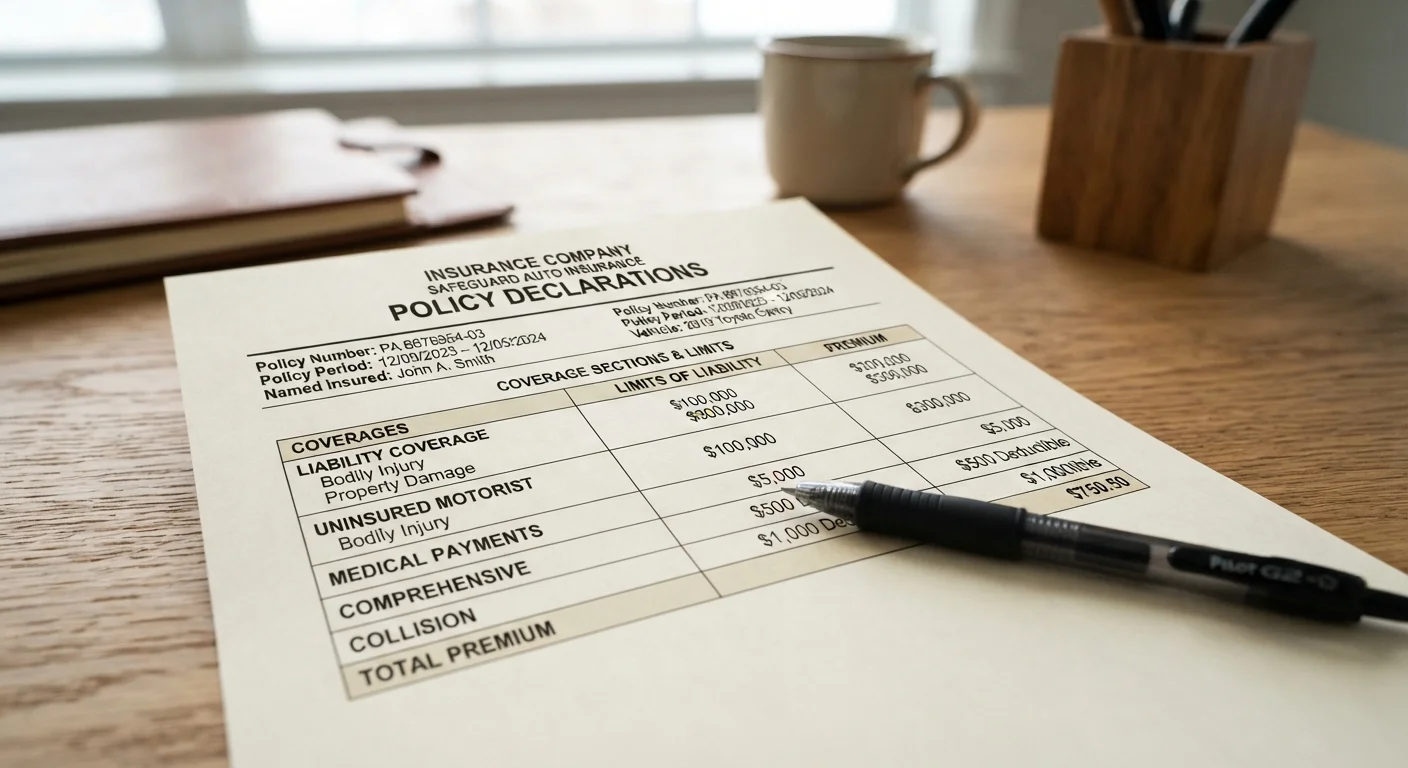
Declarations page
A summary document in your policy that lists covered vehicles, drivers, coverage types, limits, deductibles, and effective dates.
Coverage limit
The maximum dollar amount your insurer will pay for a covered loss. Costs above that limit become your responsibility.
Uninsured motorist coverage
Coverage that pays for your injuries or vehicle damage when the at-fault driver carries no insurance or too little to cover your losses.
Liability
Liability pays for bodily injury and property damage you cause to others in an accident where you are at fault. It does not repair your own vehicle. Limits are often written as three numbers, for example 25/50/25, which means $25,000 per injured person, $50,000 per accident for all injuries combined, and $25,000 for property damage.
Collision and comprehensive
Collision covers damage to your car from impact with another vehicle or object. Comprehensive covers non-collision losses including theft, vandalism, hail, flooding, and animal strikes. Both require you to pay a deductible before the insurer pays out.
Uninsured and underinsured motorist
This coverage pays when the driver who hits you carries no insurance or carries limits too low to cover your losses. Many states require it; others make it optional.
Medical payments and personal injury protection
Medical payments (MedPay) covers medical costs for you and your passengers regardless of fault. Personal injury protection (PIP) is a broader version available in no-fault states; it can also cover lost wages and related expenses. State rules on which applies vary considerably.
How premiums and deductibles work together
Your premium is what you pay to keep the policy active. Your deductible is what you pay when you file a claim. These two figures move in opposite directions: a higher deductible generally means a lower premium, because you are agreeing to absorb more of any loss yourself.
Choosing the right deductible means weighing what you could realistically pay out of pocket after an accident against the monthly savings a higher deductible provides. A $1,000 deductible on comprehensive and collision may lower your annual premium meaningfully, but only makes sense if you could cover that $1,000 without financial strain.
Insurers also weigh other factors when setting your premium: your driving history, your location, the vehicle's make and model, your annual mileage, your age, and in most states your credit history. Because each insurer weights these factors differently, quotes for identical coverage on the same vehicle can differ substantially from one company to another.
Read the declarations page first
Before reviewing the full policy document, pull out the declarations page. It summarizes your coverage types, limits, and deductibles on one or two pages. Confirming these details early catches mismatches between what you requested and what was issued.
What state minimums mean for you
Every state except New Hampshire sets a legal minimum for liability coverage. These minimums define the floor, not a recommended level of protection. A serious accident can produce medical bills and property damage that exceed state minimums quickly, and any costs above your limit become your personal financial responsibility.
Minimum coverage can leave gaps
State minimum liability limits are low by design and can be exhausted in a single serious accident, leaving you personally liable for remaining costs. If you finance or lease your vehicle, your lender will also require comprehensive and collision coverage that state minimums do not include.
If you carry an auto loan or lease, your lender or leasing company will require comprehensive and collision coverage in addition to liability, because the vehicle serves as collateral. The lender's requirements may also specify a maximum deductible. Review your financing agreement for these details. For more on how loans and insurance interact, the auto loan basics guide for first-time borrowers covers what lenders typically expect.
Questions to ask before you sign
Before accepting a policy, review the declarations page to confirm that the coverage types, limits, and deductibles match what you requested. Then ask the licensed agent or company representative these questions:
- What exclusions apply to my specific vehicle or driving situation?
- How does the claims process work, and what documentation will I need?
- Does this policy cover rental cars or provide roadside assistance, and under what conditions?
- How will my premium change if I file a claim?
- Are there any discounts I qualify for based on my driving record or vehicle safety features?
Coverage terms, exclusions, and pricing vary by provider and by state. Reading the actual policy document matters because summary materials sometimes omit conditions that affect your coverage. A licensed insurance agent can explain provisions that are unclear and help you identify gaps before you need to file a claim.
When you are ready to compare plans side by side, the auto insurance shopping checklist gives you a structured framework for evaluating plans on equal terms.
This article is for general informational purposes only and does not constitute personalized insurance, financial, or legal advice. Coverage rules, requirements, and product availability vary by state and insurer. Consult a licensed insurance agent or adviser for guidance specific to your situation.