
Set a realistic budget before you search
The purchase price is only one part of what a used car will cost you. Before you look at a single listing, add up what you can expect to spend on sales tax, title and registration fees, insurance, and any immediate maintenance the car may need. These costs vary by state and vehicle, but buyers who skip this step often find themselves stretched after the sale closes.
A useful starting point is to separate what you can pay upfront from what you can manage monthly if you finance. If you plan to borrow, understanding how auto loans work before you shop will help you avoid agreeing to terms that cost more than you planned. A lower purchase price with a high interest rate can end up more expensive than a slightly pricier car financed at a better rate.
Write down a ceiling for the total purchase price and a ceiling for a monthly payment you can sustain comfortably. Those two numbers will keep your search focused.
Decide where to shop
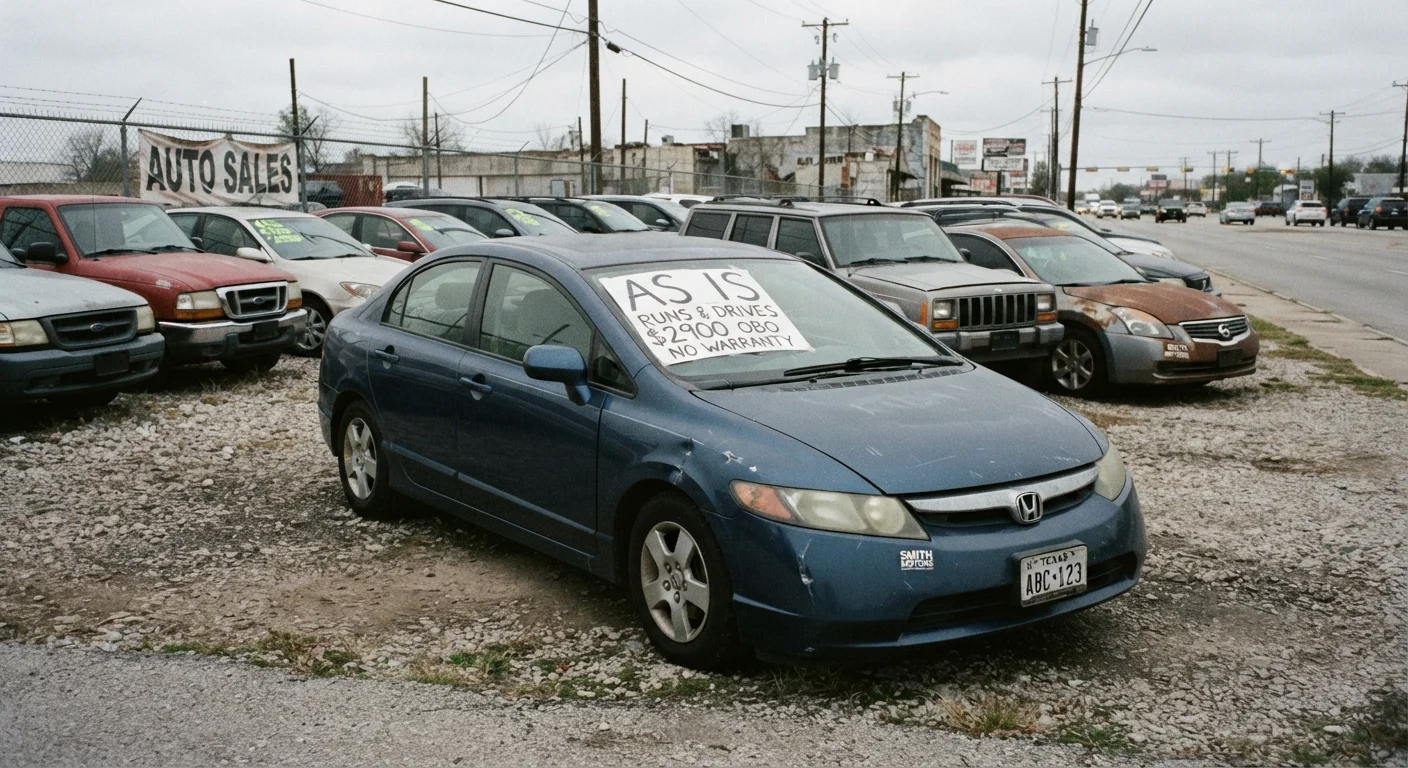
Used cars are available through franchised dealerships, independent lots, and private sellers. Each channel has trade-offs. Dealerships generally handle the paperwork, may offer limited warranties on some vehicles, and are subject to consumer protection laws. Private sales can carry lower prices, but the buyer takes on more responsibility for vetting the car and handling the title transfer.
Comparing private sellers and dealerships in detail can help you figure out which fits your situation. If you are not comfortable evaluating a car on your own, a dealership with a certified pre-owned program may reduce some of the uncertainty. If you are confident doing your own research and can arrange an independent inspection, a private sale may be worth considering.
Research vehicles and check history reports
Once you identify vehicles you are interested in, pull a history report using the car's vehicle identification number (VIN). The VIN is a 17-character code found on the driver's side dashboard and on the title. A history report can show past accidents, flood or fire damage, title problems, and whether the odometer reading appears consistent with the car's age and previous registrations.
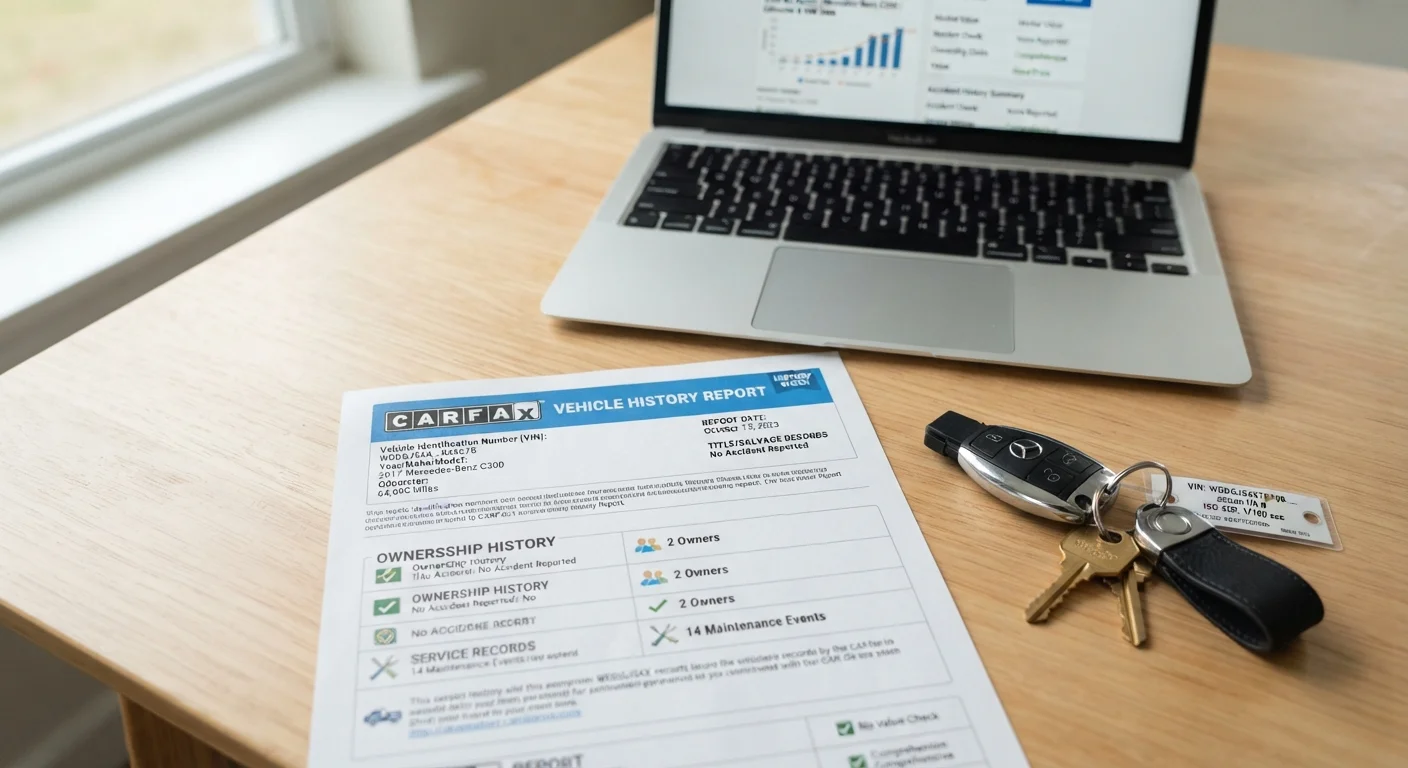
History reports do not catch everything. A car with a clean report can still have mechanical problems. Use the report as a filter, not a guarantee. You should also run the VIN through the National Highway Traffic Safety Administration's free recall database to check for any open safety recalls that have not been addressed.
Vehicle history report
A document that compiles records about a specific car, including past accidents, title changes, and odometer readings, using the vehicle identification number (VIN).
Salvage title
A legal designation given to a vehicle that an insurance company declared a total loss. It signals significant past damage and affects insurability and resale value.
Pre-purchase inspection
An independent mechanical review of a used vehicle performed by a qualified mechanic before the buyer commits to purchasing it.
Loan preapproval
A lender's conditional agreement to loan you up to a certain amount at a stated interest rate, based on a review of your credit and finances, before you select a vehicle.
Annual percentage rate (APR)
The yearly cost of borrowing money, expressed as a percentage. It includes the interest rate and certain fees, making it useful for comparing loan offers.
Watch for title and odometer issues
A mismatched VIN, an odometer reading that seems low for the vehicle's age, or a title that lists a state known for flood events are all worth investigating further. Odometer fraud is a federal crime in the United States, but it still occurs. A vehicle history report and an in-person inspection together are your strongest protection.
Inspect the car and arrange a test drive
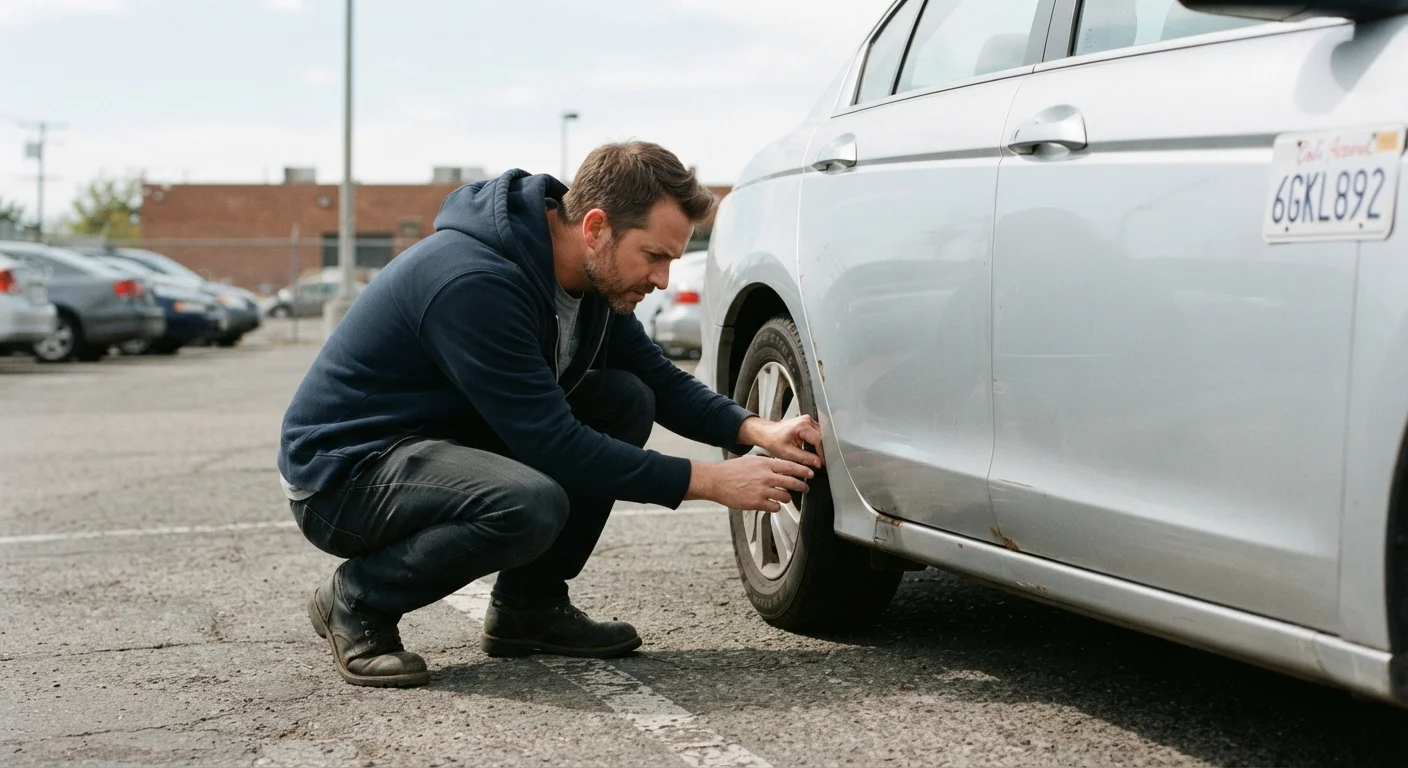
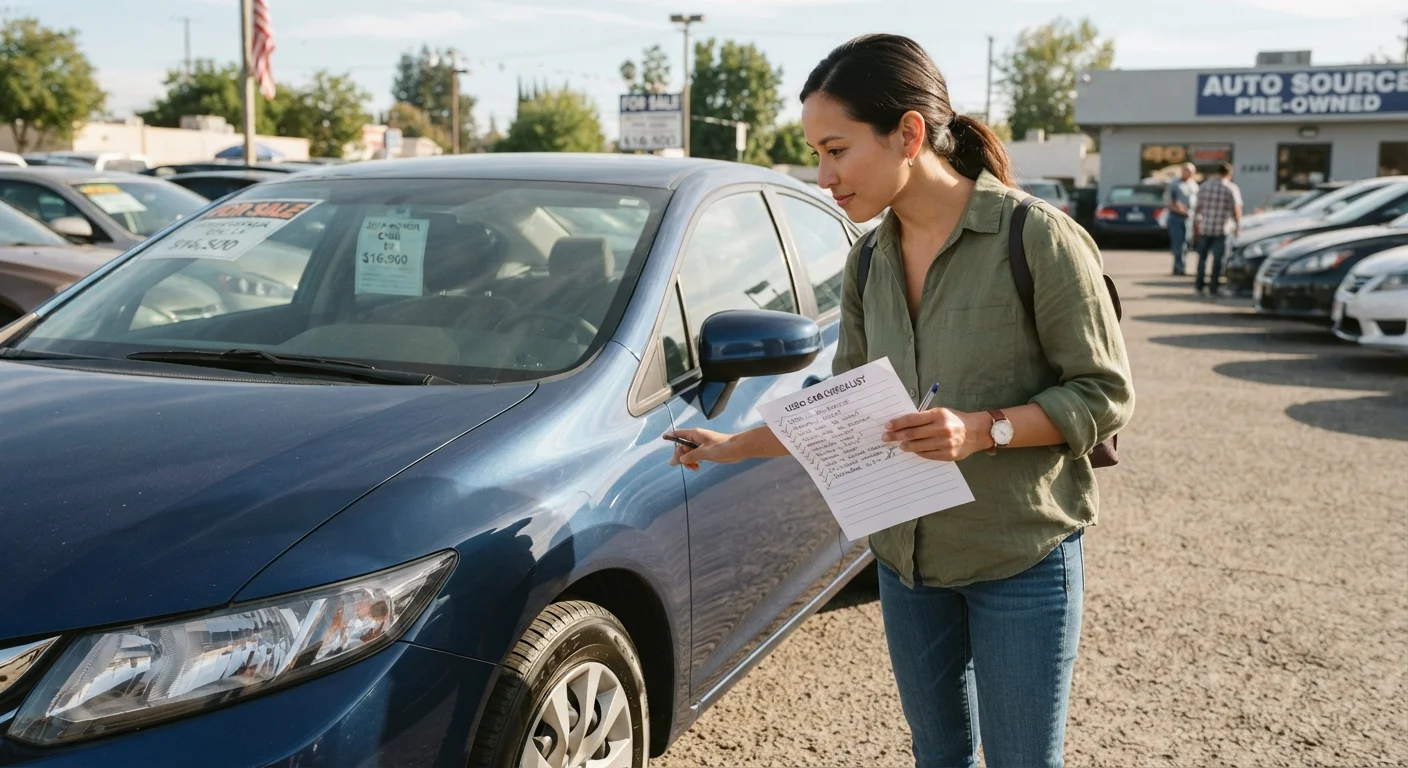
A visual walk-around and a test drive are non-negotiable steps. Look at the body panels for uneven gaps, paint overspray, or mismatched colors, which can indicate past repair work. Check all four tires for even wear. Open the hood and look for fluid leaks, corrosion, or hoses that appear cracked or brittle.
During the test drive, pay attention to how the car accelerates, brakes, and handles at highway speed. Listen for unusual sounds when turning, braking, or going over bumps. Test all electronics, including windows, air conditioning, and lights.
Get a mechanic's opinion before committing
Ask a seller if you can take the car to an independent mechanic for a pre-purchase inspection before you finalize anything. Most legitimate sellers will agree. If a seller refuses, treat that as a signal worth taking seriously. See the pre-purchase inspection checklist for a detailed walkthrough of what to examine.
For a structured list of what to examine, see the pre-purchase inspection checklist.
Understand financing and insurance before you sign
If you need a loan, getting preapproved by a bank or credit union before visiting a dealer gives you a concrete rate to compare against any financing the dealer offers. Getting preapproved for an auto loan walks through the application process and what lenders evaluate. For a broader look at how used car loans are structured differently from new car loans, used car financing explained covers the key details.
Insurance is a legal requirement in nearly every U.S. state, and most states require proof of insurance before you can register a vehicle. Contact your insurer before you finalize the sale so coverage starts the day you take possession. Auto insurance basics can help you understand the coverage types and questions to ask when comparing policies. More on coverage options is available through the auto insurance hub.
Read every document before you sign. Confirm that the VIN on the title matches the car in front of you, that the seller's name matches the title, and that there are no liens listed that have not been satisfied.
This article is for general informational and educational purposes only. It is not personalized financial, legal, or insurance advice. Loan terms, insurance requirements, and registration rules vary by state and by individual circumstances. Consult a licensed financial adviser, insurance agent, or attorney for guidance specific to your situation.