
What 'as-is' actually means at the point of sale
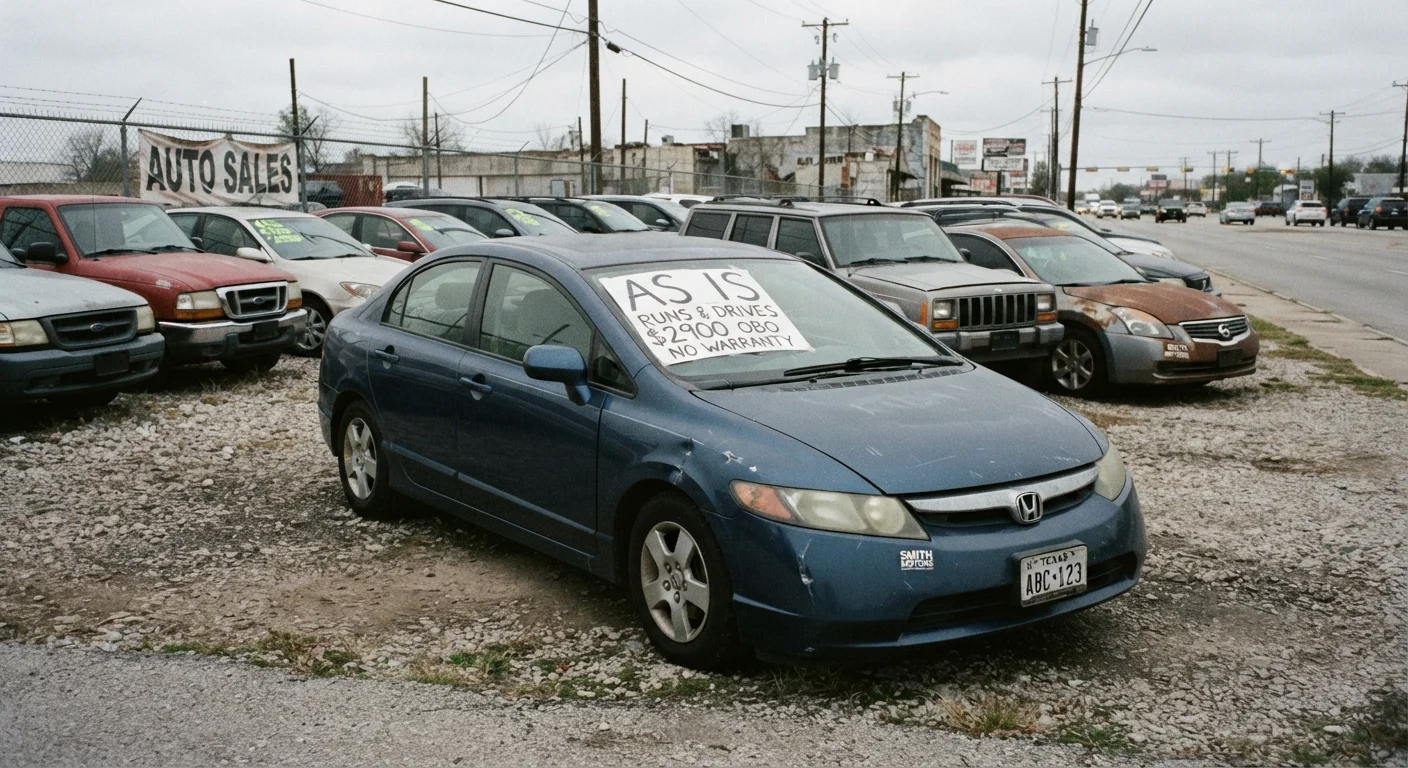
The phrase as-is sounds simple, but buyers often misread it. It does not mean the car is broken. It means the seller is making no promises about condition, and no promises to fix anything after the sale closes. You are accepting whatever state the vehicle is in, whether that includes a worn battery, a slow oil leak, or nothing wrong at all.
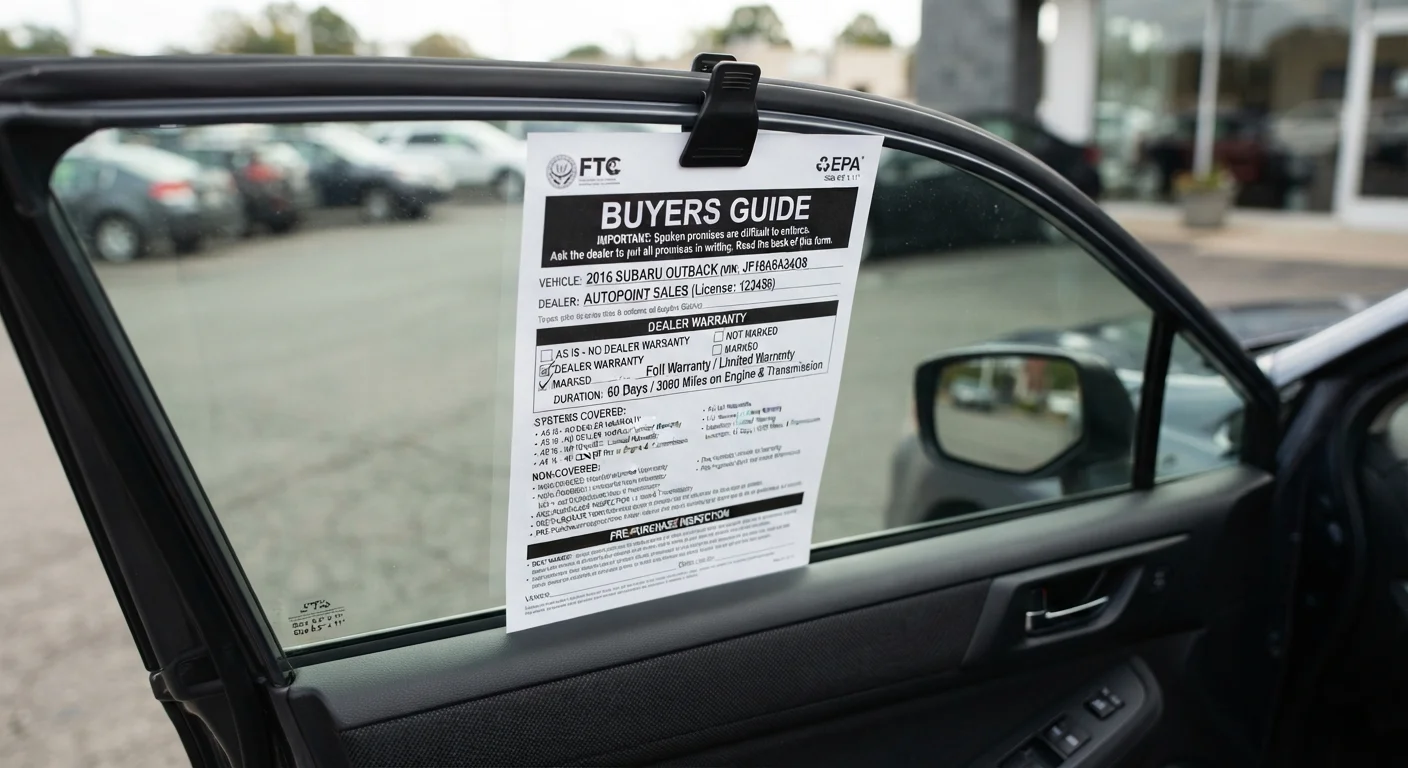
For dealer sales, the Federal Trade Commission's Used Car Rule requires that a Buyers Guide be posted on every vehicle. That form has two checkboxes: one for as-is, one for warranty coverage. When the as-is box is checked, any implied warranty of merchantability, the basic expectation that a product does what it is supposed to do, is formally disclaimed in most states. Wisconsin is a notable exception where implied warranties cannot be fully waived on consumer sales, but laws vary and change, so confirm the rules in your state.
Private sellers are not required to use the Buyers Guide form, but an as-is agreement in a private sale carries similar weight. The seller is telling you they are done with the car once money changes hands.
What protections still exist after an as-is sale
Signing an as-is agreement does not leave you entirely without recourse. Fraud law still applies. If a seller knew the transmission was failing, told you nothing, and you have evidence of that, you may have a legal claim regardless of the as-is label. That is a matter for an attorney, not a simple return policy.
Some states extend lemon law coverage to used vehicles under certain conditions, though most state lemon laws focus on new cars. A handful of states have separate used car statutes with their own rules around disclosure and remedies. The specifics differ enough that reading your state's consumer protection guidelines, or speaking with a licensed attorney, is worth the time before a large purchase.
The as-is designation also does not affect a manufacturer recall. If the vehicle has an open safety recall, the automaker's obligation to repair it exists independently of how the car was sold. You can check recall status by entering a vehicle identification number (VIN) at the National Highway Traffic Safety Administration's website.
Check for open recalls before buying
An as-is sale does not cancel a manufacturer's recall obligation. Enter the vehicle's VIN at the NHTSA website (nhtsa.gov) to see whether any safety recalls are open and unrepaired. An open recall may affect your decision or give you a negotiating point.
How to approach an as-is purchase without taking on unnecessary risk
The most direct way to reduce uncertainty is a pre-purchase inspection. An independent mechanic, one with no connection to the seller, can put the car on a lift and check for issues that are not visible in a test drive. A pre-purchase inspection typically covers mechanical systems, the frame, fluid condition, and signs of prior accident damage.
A vehicle history report (using the VIN) can surface past accidents, title problems like salvage or flood designations, and ownership history. It is a useful starting point, though it does not catch everything a mechanic will find.
Private sellers and dealers handle as-is sales differently, and understanding that distinction shapes how you should negotiate and what questions to ask. The full cost of ownership, including potential repair costs after an as-is purchase, belongs in any honest budget calculation before you commit.
This article is for general informational purposes only and is not legal or financial advice. Laws governing used car sales vary by state. Consult a licensed attorney or qualified professional for guidance specific to your situation.