Use this checklist to systematically evaluate a used vehicle's condition, from tire wear and fluid levels to frame integrity and electronics.
Key Takeaways
Inspect the vehicle in daylight and on a level surface for the most accurate read.
Fluid levels, tire condition, and frame integrity are the most consequential checks.
A vehicle history report gives context but does not replace a physical inspection.
A licensed mechanic should evaluate anything you cannot confidently assess yourself.
Electronics and safety systems require the ignition on to test properly.
What this checklist covers
This checklist is for anyone walking up to a used vehicle and wanting to know what to look at before committing to a purchase. It covers the checks you can do yourself without specialized tools, plus the ones that call for a licensed mechanic. Work through the groups in order: exterior, then under the hood, then interior, then a short test drive. If you are new to the full buying process, the complete walkthrough covers budgeting and negotiation alongside the inspection step.
Two practical notes before you start. First, always inspect in daylight. Artificial light in a garage hides paint defects and rust. Second, bring a flashlight, a rag, and a notepad. You do not need mechanical training for most of these checks, but you do need to write down what you find so nothing slips your memory when you are deciding.
Required
Flashlight
Illuminates the undercarriage, engine bay, and interior areas that natural light does not reach.
Required
Clean rag or paper towels
Used to wipe dipsticks when checking fluid levels and condition.
Required
Notepad or phone notes app
Records findings from each section so you can compare and discuss them later.
Required
Vehicle history report
Provides records of prior accidents, ownership, and title status to cross-check against physical findings.
Optional
Tire tread depth gauge
Measures remaining tread depth on each tire more precisely than the visual check alone.
The inspection checklist
Work through each group methodically. Flag anything that concerns you and bring your notes when you talk to the seller or a mechanic.
Exterior and body
Walk all four sides in full daylight and look for paint color mismatches between panels, which can indicate a prior repaint after a collision.Must
Run your hand along body seams to feel for uneven gaps or filler compound beneath paint.Must
Crouch at each corner and look down the length of the vehicle for ripples or waves in the body panels.Must
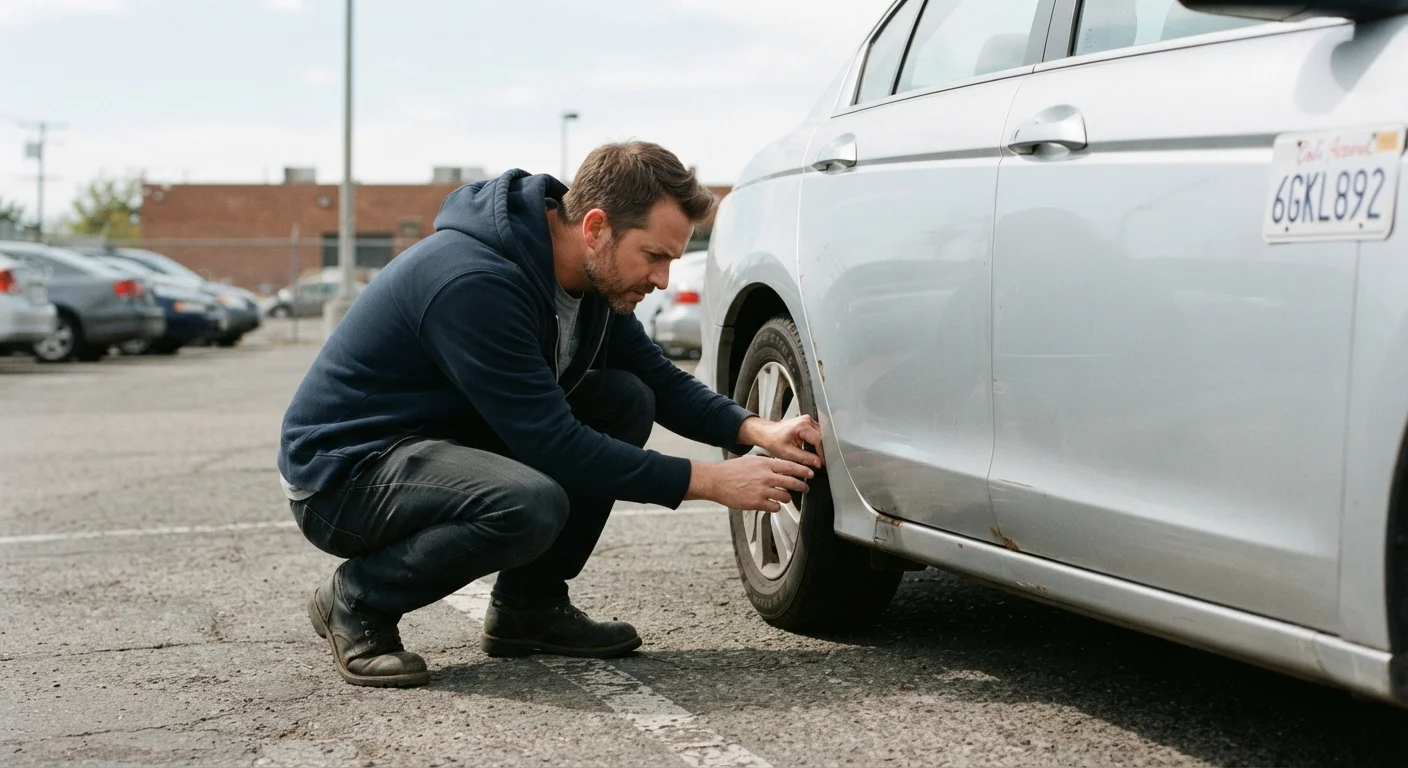
Check all four tires for tread depth and uneven wear; uneven wear across a single tire often points to alignment or suspension problems.Must
Inspect the wheel wells and rocker panels (the strips beneath the doors) for rust or flaking metal.Should
Frame and undercarriage
Look underneath the vehicle for fresh undercoating, which sellers sometimes apply to hide rust.Must
Check the frame rails (the main structural beams running front to back) for bends, cracks, or weld marks that were not factory-installed.Must
Ask a mechanic to put the vehicle on a lift if you cannot see the undercarriage clearly from the ground.Should
Under the hood
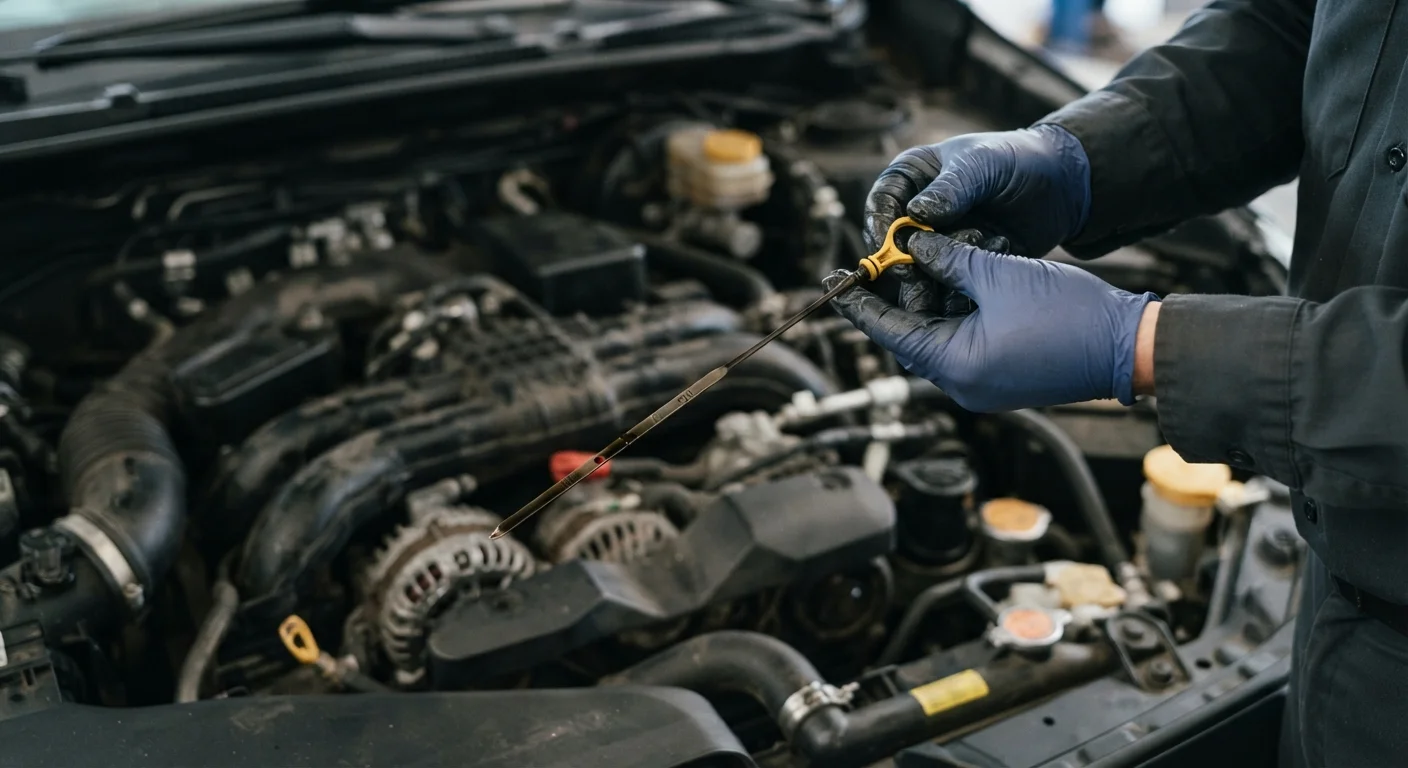
Pull the oil dipstick, wipe it clean, reinsert it, and check the level and color; milky or frothy oil can signal a coolant leak into the engine.Must
Check the coolant reservoir level and look for oily residue around the cap, another sign of a potential head gasket problem.Must
Inspect brake fluid, power steering fluid, and transmission fluid if the vehicle has a dipstick for it; low or dark fluid suggests deferred maintenance.Must
Look at the battery terminals for heavy corrosion and check whether the battery has a manufacture date sticker indicating its age.Should
Scan the engine bay for cracked hoses, frayed belts, or any fluid stains on the engine block or surrounding surfaces.Should
Interior and electronics
Turn the ignition to the 'on' position without starting the engine and confirm that all dashboard warning lights illuminate briefly, then go out; a light that stays on after startup indicates a stored fault.Must
Test all windows, locks, mirrors, and seat adjustments to confirm they operate without binding or unusual noise.Must
Check the air conditioning and heat; turn both to maximum and allow two to three minutes to confirm they reach temperature.Should
Test every speaker, the backup camera if equipped, and any driver-assistance displays while the vehicle is stationary.Should
Inspect the headliner, carpet, and door sills for water staining or a musty odor, which can indicate a past flood or ongoing leak.Must
Test drive
Drive at highway speed and release the steering wheel briefly on a straight, empty road to check whether the vehicle pulls to one side.Must
Brake firmly from 30 mph in a safe area and note any vibration, pulling, or grinding; these indicate worn rotors or brake pads.Must
Listen for clunks or rattles when turning at low speed, which can point to worn CV joints or suspension components.Must
Confirm the transmission shifts smoothly through all gears without hesitation, slipping, or a jolt between gears.Must
Oil color and level on the dipstick can indicate how well an engine has been maintained.
Once you have completed your walk-around and test drive, compare your notes against the vehicle history report. Discrepancies between reported accidents and physical evidence of repairs are worth questioning directly. If the seller cannot explain inconsistencies, treat that as significant.
Get a mechanic's inspection before you sign
This checklist covers what a buyer can observe without tools or training. It does not replace a pre-purchase inspection by a licensed mechanic. A mechanic can use a lift, a diagnostic scanner, and hands-on testing to find problems that are invisible from the outside. Learn how independent inspections work before you commit to any vehicle.
This article provides general educational information about inspecting used vehicles. It is not a substitute for advice from a licensed mechanic or automotive professional. Coverage, loan terms, and regulations vary by provider and state. Consult qualified professionals for decisions specific to your situation.
Used Cars Editorial Team is the collective byline for our editorial team and contributor network. Articles published under this byline or an editorial pen name are researched, written, and reviewed according to our editorial standards for clarity, consistency, and independence before publication.
The content provided on our blog site traverses numerous categories, offering readers valuable and practical information. Readers can use the editorial team’s research and data to gain more insights into their topics of interest. However, they are requested not to treat the articles as conclusive. The website team cannot be held responsible for differences in data or inaccuracies found across other platforms. Please also note that the site might also miss out on various schemes and offers available that the readers may find more beneficial than the ones we cover.