
How each path works
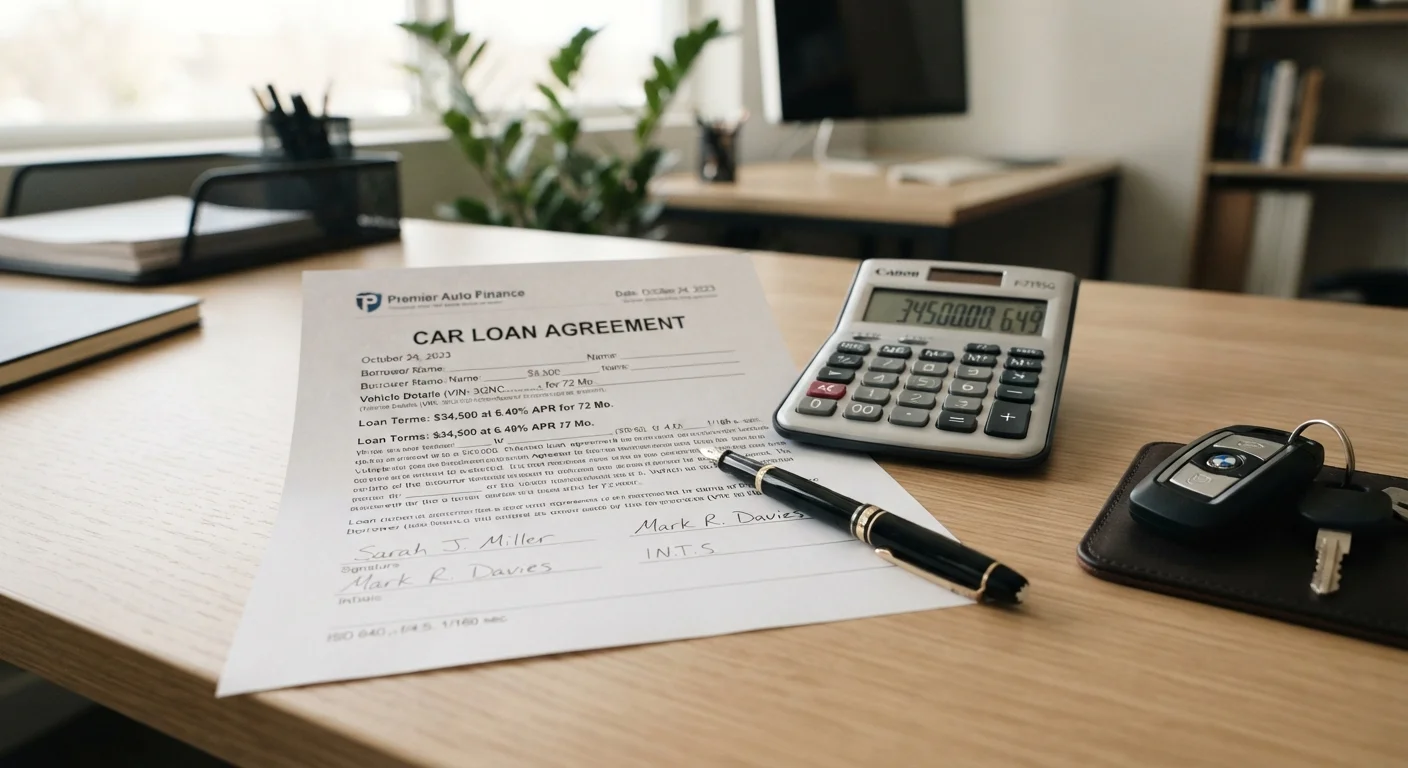
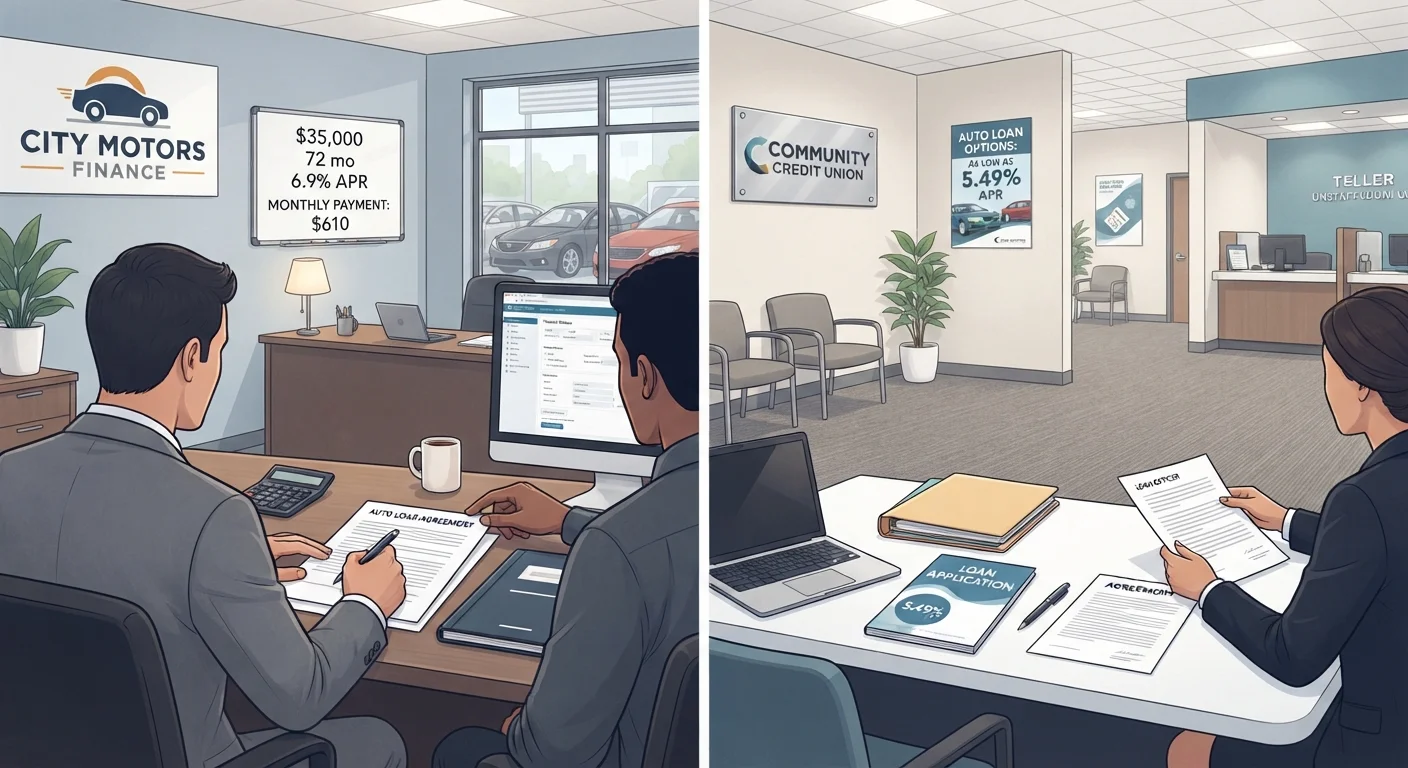
With dealer financing, you fill out a credit application at the dealership. The finance manager sends that application to a network of lenders, collects competing offers, and presents you with terms. The dealer often earns a fee by marking up the lender's wholesale rate before quoting it to you. That markup, sometimes called a dealer reserve, is built into the APR (annual percentage rate, the true yearly cost of borrowing including fees) you see on the contract.
With a direct loan from a bank or credit union, you apply before or after choosing a vehicle. The lender approves you for a maximum amount at a stated APR and issues a preapproval letter or check. You bring that to the dealership and use it to pay for the car, just as a buyer with cash would. The dealer has no role in setting your interest rate.
Understanding how auto loans work before you shop makes it easier to evaluate whichever path you take.
Where rates come from and how they differ
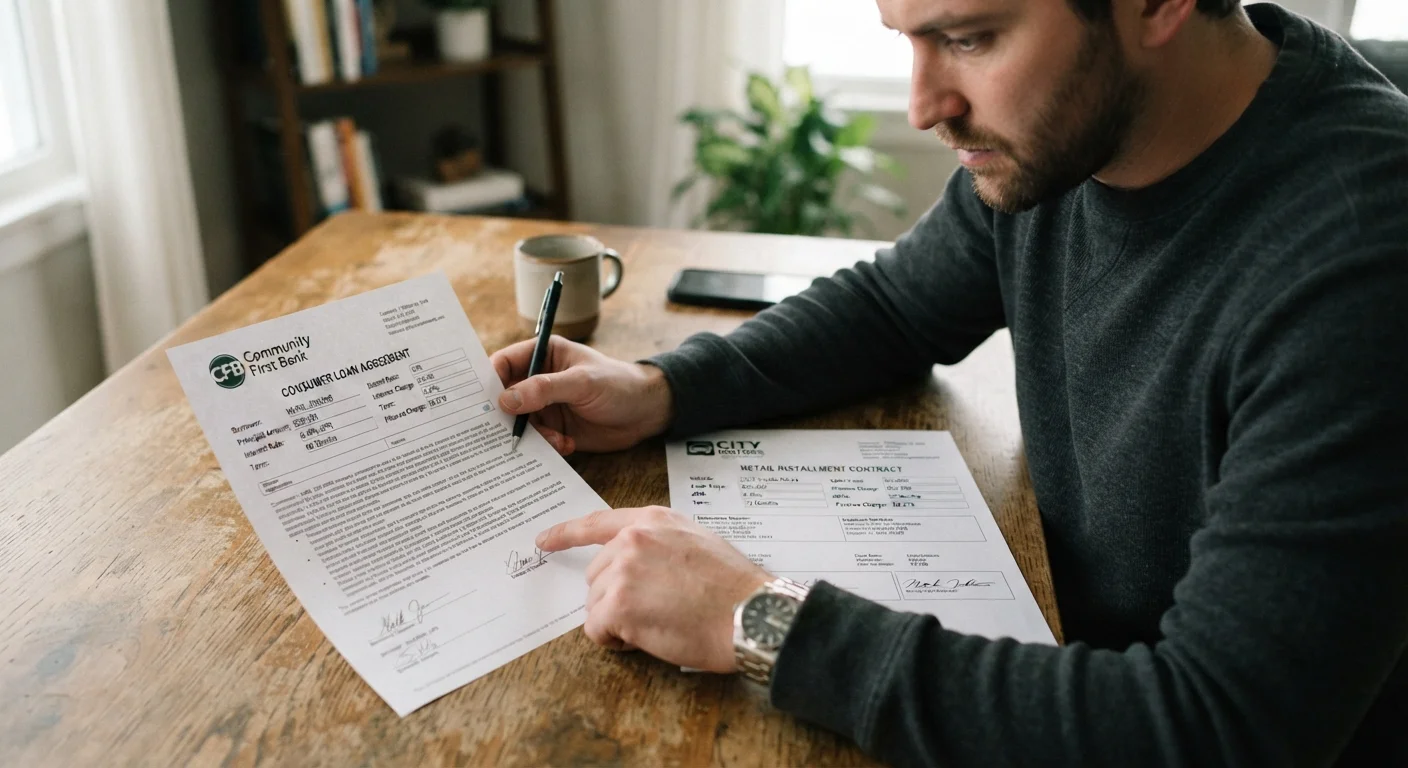
A lender prices your loan based largely on your credit score and the loan term. The dealer then layers its own markup on top of the lender's approved rate. Federal regulations have shifted how that markup can be structured, but it can still add a percentage point or more to your APR in some cases.
Credit unions are not-for-profit and return earnings to members, which lets them price loans below what many commercial banks charge. Banks set rates based on their cost of funds and risk models. Neither type of direct lender adds a dealer markup.
Your credit score shapes every offer you receive, whether the offer comes through a dealer or directly from a lender. A score difference of 60 to 80 points can move your APR by several percentage points, which adds up substantially over a 48- or 60-month term.
| Criterion | Dealer financing | Bank or credit union loan |
|---|---|---|
| Where the loan originates | Third-party lender via dealership | Bank or credit union directly |
| Rate markup possible | Yes, dealer reserve may apply | No intermediary markup |
| Preapproval option | Not available in advance | Yes, before you shop |
| Manufacturer promotional rates | Available on eligible vehicles | Not available |
| Application process | Single application at the dealership | Separate application before or after purchase |
| Negotiating position | Rate and price often bundled | Rate fixed before price negotiation |
| Typical credit flexibility | Wide lender network, including subprime | Varies; credit unions may be more flexible for members |
Preapproval as a comparison tool
Getting preapproved by a bank or credit union before visiting a dealership gives you a baseline. If the dealer's financing office presents a rate lower than your preapproval, you can take it. If the dealer's rate is higher, you already have a working alternative. Without a preapproval, you have no reference point and may accept a rate that costs more than necessary.
Preapproval also separates two negotiations that dealers benefit from keeping combined: the vehicle price and the financing terms. When monthly payment is the main number on the table, loan term and rate can shift without the buyer immediately noticing the effect on total cost.
Loan term length affects total cost significantly. A lower monthly payment on a 72-month loan can cost more in total interest than a higher payment on a 48-month loan, even at the same APR.
This article is for general informational purposes only and is not personalized financial or lending advice. Loan terms, rates, and eligibility vary by lender, credit profile, and state. Consult a qualified financial adviser or licensed lending professional before making borrowing decisions.