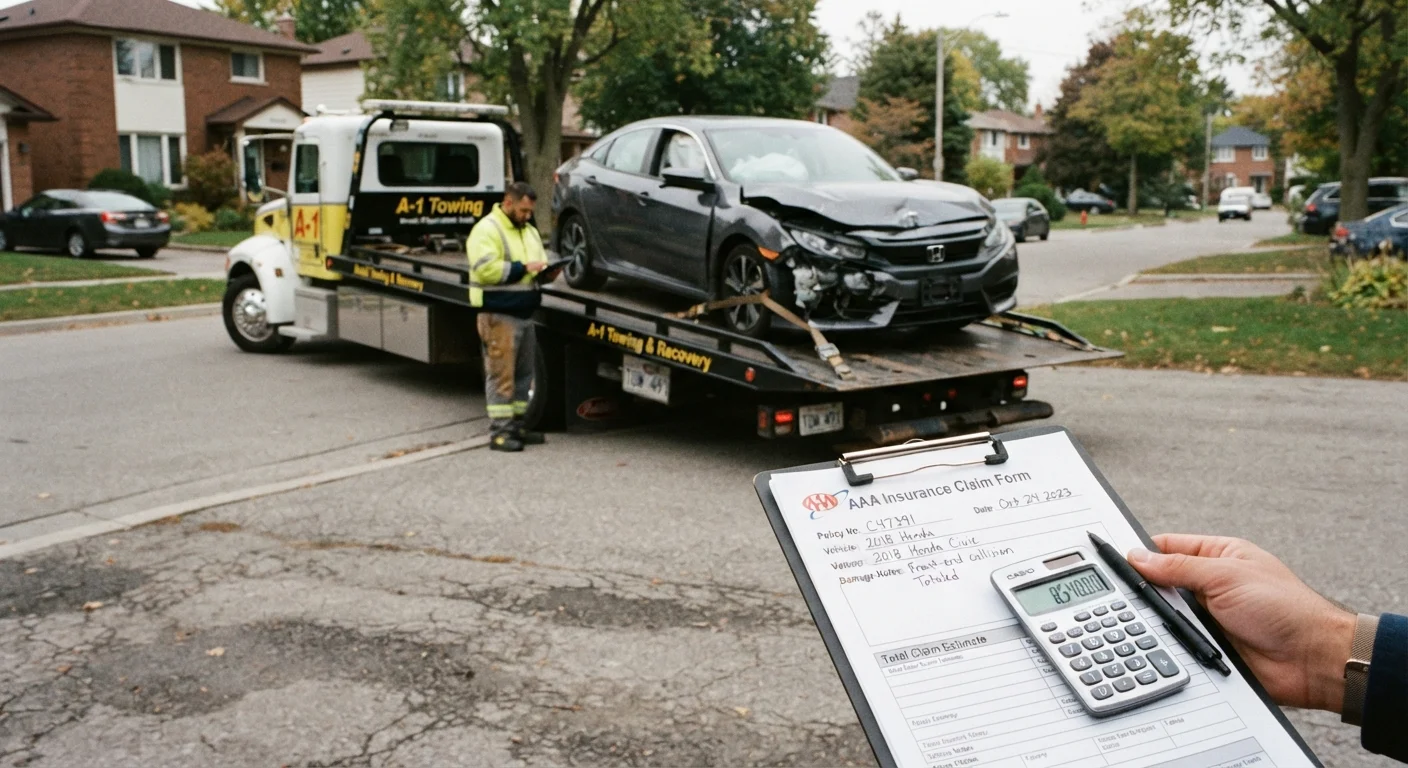


What your insurer does first
When you file a claim after an accident, your insurer opens a claims investigation to determine fault, assess damages, and calculate the payout. This process is separate from the rating review that follows. The claims team focuses on resolving the immediate financial loss. The underwriting team, which handles your policy terms and premium, reviews your record afterward, typically at your next renewal date.
During the claims process, your insurer may contact the other driver's carrier, review the police report, inspect the vehicle, and request statements. Cooperating fully and promptly generally speeds up resolution. For a broader overview of how policies work before any accident occurs, see Auto Insurance 101.
How your premium can change
The most direct financial consequence of an at-fault accident is a premium surcharge applied at renewal. A surcharge is an additional charge added to your base rate because you now represent a higher statistical risk to the insurer. The amount varies widely by carrier and state regulation, but it can remain on your policy for three to five years.

Several factors shape the size of the increase: the dollar amount of the claim, whether bodily injury was involved, your prior claims history, and your state's rules on how much insurers can raise rates. Factors that determine your premium go beyond just accidents, so a clean record in other areas can soften the overall impact.
Not every accident triggers a surcharge. Many carriers do not raise rates on not-at-fault claims, and some states restrict that practice by law. Minor comprehensive claims (hail damage, for example) are also handled differently from liability claims where you caused injury or property damage to others.
3-5 years
Typical surcharge period after an at-fault accident
Most U.S. insurers apply post-accident surcharges for a three- to five-year rating window, per general industry practice.
~7 years
Maximum look-back window for serious incidents
Some carriers and states allow insurers to review driving records going back seven years for major violations or severe accidents.
Accident forgiveness and what it actually covers
Accident forgiveness is a feature that prevents a first at-fault accident from generating a surcharge. It is available through some insurers as a built-in benefit for long-tenured customers or as an optional add-on. The catch: it forgives the rate increase, not the accident itself. The incident still appears on your driving record and will be visible to any insurer you approach for a quote.
Eligibility rules differ. Some carriers require three to five years without a prior at-fault claim before the feature activates. If you have already had one accident this policy period, a second will almost certainly produce a surcharge regardless of any forgiveness provision. Read your policy declarations page carefully to confirm whether you have this coverage and what conditions apply.
Renewal, non-renewal, and shopping after an accident
Insurers generally cannot cancel your policy mid-term because of a single accident. At renewal, though, they have more options. They can renew with a higher premium, change your coverage terms, or decline to renew altogether if your risk profile falls outside their current appetite. State law requires advance written notice before a non-renewal takes effect, giving you time to find a new carrier.
If you decide to shop for a new policy, expect other insurers to see the accident. Carriers query motor vehicle records and industry claims databases (such as LexisNexis CLUE) when generating quotes, so the claim will surface. That said, different carriers weigh accident history differently in their pricing models, and comparison shopping can still uncover a lower rate than your current insurer's post-accident price. Other factors that raise your rate may also be worth reviewing before you shop, since a combination of risks compounds the premium impact.
This article provides general information about auto insurance concepts and is not personalized insurance, financial, or legal advice. Coverage terms, surcharge rules, and state regulations vary by provider and location. Read your actual policy documents and consult a licensed insurance agent for guidance specific to your situation.