
How automakers organize their lineups
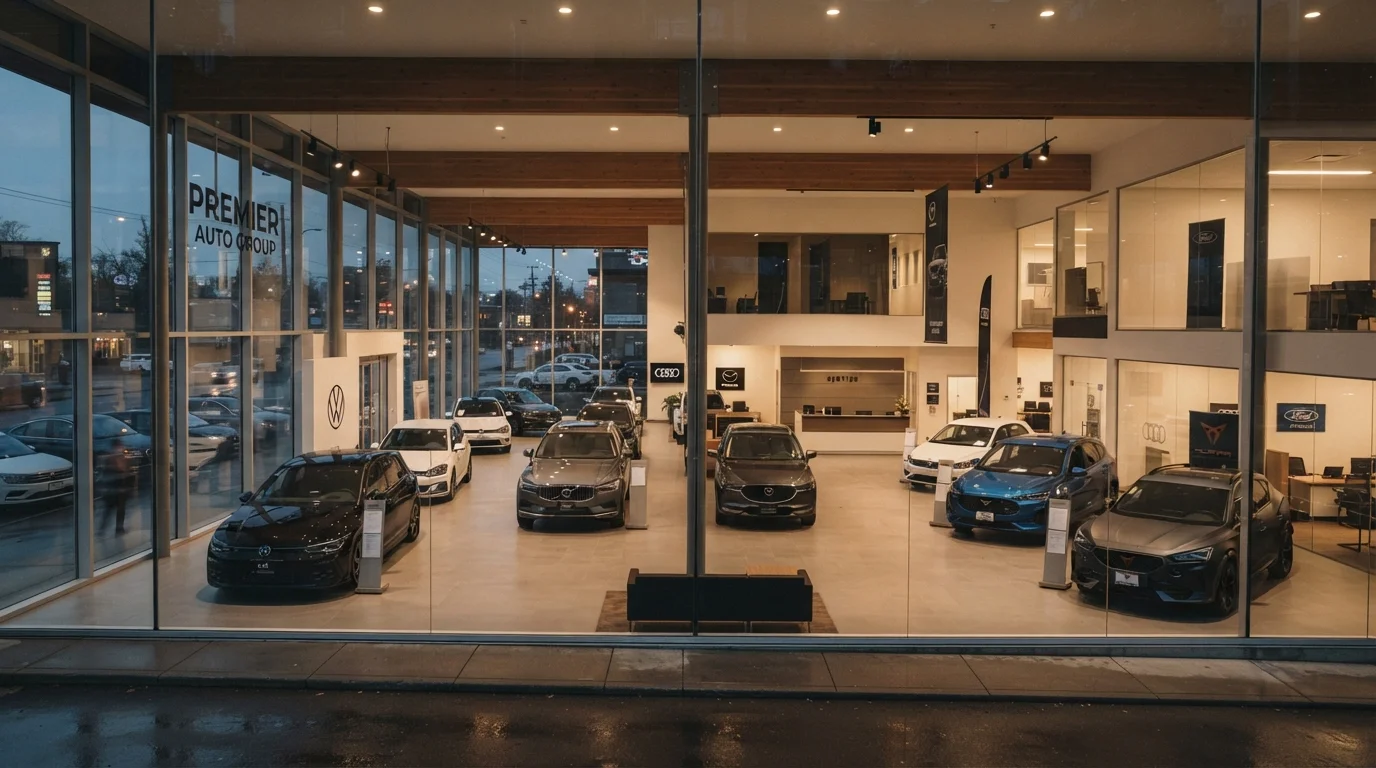
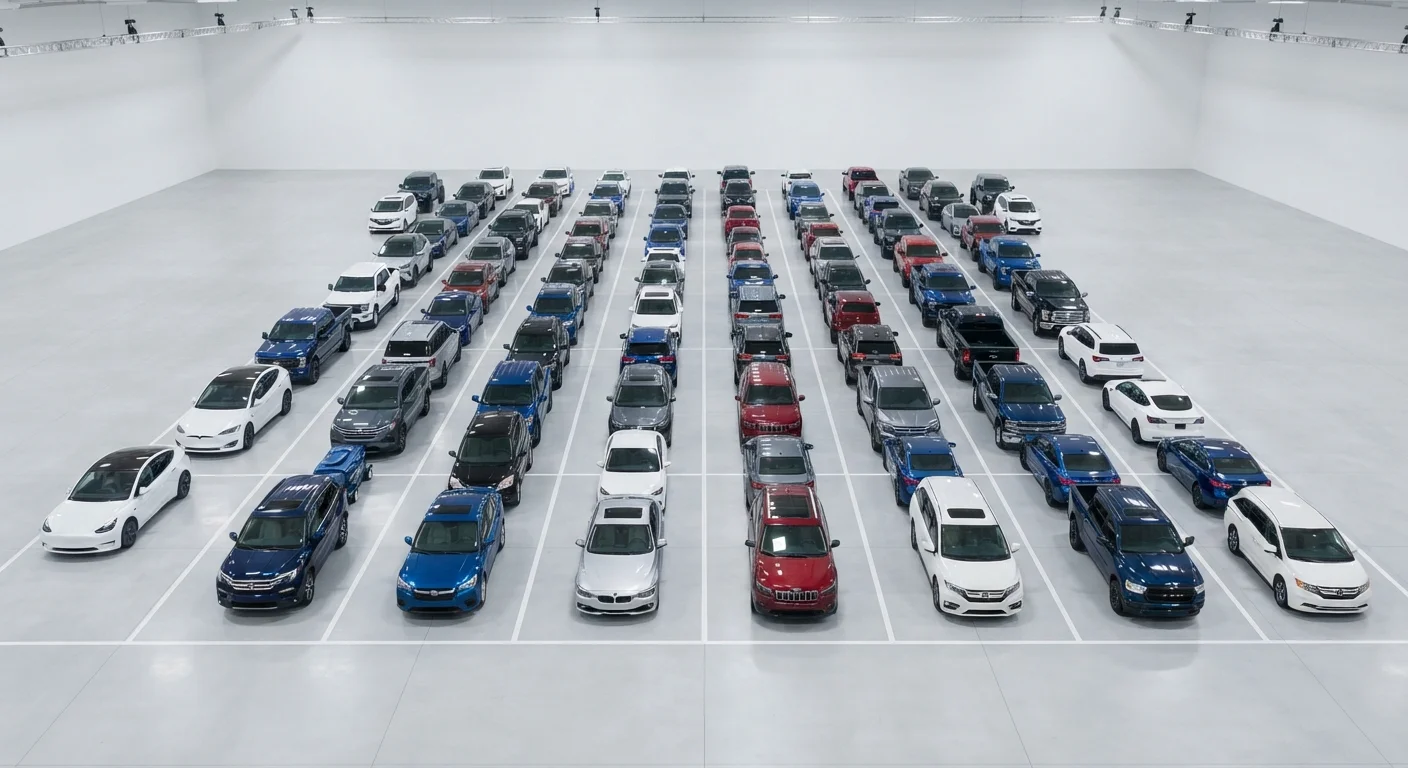
Every major automaker groups its vehicles into segments, which are categories defined by body style, size, and purpose. A single brand may cover anywhere from eight to twenty distinct models, each aimed at a different buyer. Knowing how these segments work helps you filter options faster and compare models on equal terms.
Segments also have sub-tiers. A brand's SUV lineup, for example, typically spans subcompact, compact, midsize, and full-size options. The same pattern applies to sedans and trucks. Price, cargo space, and available powertrains all shift as you move up in size within a segment.
Brand reputation and model range are related but separate ideas. A brand can have a strong reliability record overall while still having individual models that perform differently in owner surveys and safety tests.
| Most common vehicle segments | Sedan, SUV/crossover, pickup truck, minivan, hatchback, coupe |
| Fastest-growing U.S. segment | SUVs and crossovers (U.S. market sales data, 2020s) |
| Typical mainstream brand lineup size | 8 to 20 distinct models |
| Key ownership cost factors | Depreciation, fuel economy, insurance, maintenance |
| Luxury vs. mainstream price gap | Often 30% to 100%+ for comparable size |
| Trim levels per model (typical range) | 3 to 6 |
Major vehicle segments explained
Understanding what each body style does well, and where it falls short, makes it easier to match a segment to your actual driving needs.
Sedans
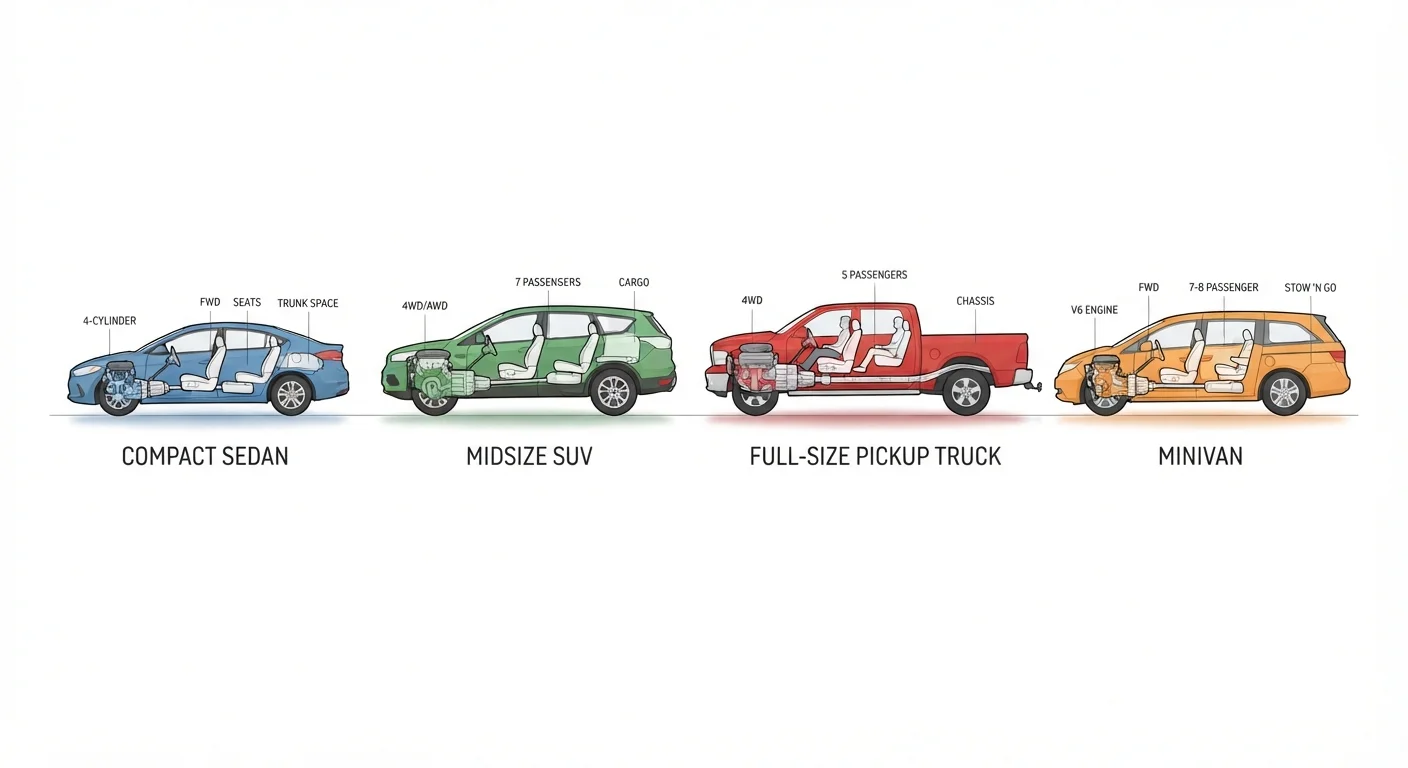
Sedans have a three-box shape: engine, passenger cabin, and trunk as separate compartments. They sit lower to the ground than SUVs, which gives them better aerodynamics and often lower fuel costs. Cargo space is fixed by the trunk, so they work well for commuters and small families but less so for hauling bulky items.
SUVs and crossovers
This is the largest segment in U.S. sales. A true SUV uses body-on-frame construction and handles heavier towing. A crossover (CUV) uses a car-based platform, which produces a smoother ride and better fuel economy at the cost of some towing and off-road capability. Most vehicles sold as SUVs today are crossovers. Luxury and mainstream brands both compete heavily in this segment, so price ranges are wide.
Pickup trucks
Trucks are sold in light-duty, midsize, and heavy-duty tiers. Light-duty full-size trucks dominate U.S. sales. They carry passengers, tow trailers, and haul cargo in the bed. Midsize trucks are shorter and easier to park. Heavy-duty trucks are built for commercial or high-load towing and are priced accordingly.
Minivans
Minivans prioritize passenger capacity and interior flexibility. Sliding rear doors, flat-folding seats, and low step-in height make them practical for families with children. They are less common than SUVs but often cheaper to buy and operate in their class.
Hatchbacks and wagons
Hatchbacks add a rear door that opens into the cargo area, giving more loading flexibility than a sedan with a similar footprint. Wagons extend the roofline further back for greater cargo depth. Both body styles tend to appear in compact and midsize tiers.
Trim levels and what they change
Within any segment, each model typically has three to six trim levels. The base trim sets the floor for price and features. Mid-range trims add technology packages, comfort upgrades, or a more powerful engine. The top trim usually includes all available features and carries the highest price.
Trim names vary by brand. One brand may use numbered tiers (1.5, 2.0, 3.0), while another uses letter codes or names. The structure is the same regardless of naming: each step up adds content and cost.
When comparing models across brands, check which trim level is being quoted. An advertised price often refers to the base trim, which may lack features standard on a competitor's mid-range trim at a similar price. Safety ratings are also assigned to specific trim and configuration combinations, not entire model lines, so the tested trim may differ from the one you are considering.
For shoppers looking at pre-owned vehicles, trim identification matters for valuation. Higher trims tend to hold more of their original value. The used car market prices the same model differently depending on trim, mileage, and condition. If you plan to finance a purchase, reviewing auto loan basics alongside segment research helps you set a realistic budget before visiting a dealership.
The domestic versus import distinction also intersects with model range decisions. Some segments, particularly full-size trucks, are dominated by domestic brands, while others are more evenly split. Knowing where each brand concentrates its lineup helps you understand which segments offer the most competition and variety.
Vehicle segment
A category that groups vehicles by body style, size, and intended use, such as compact sedan or full-size SUV. Automakers use segments to target different buyer needs and price points.
Trim level
A variation of a single model that differs in standard features, technology, or engine options. Higher trims carry higher prices. Examples include base, mid, and premium trims.
Crossover (CUV)
A vehicle built on a car platform rather than a truck frame, combining SUV-like space with car-like handling. Most modern family SUVs are technically crossovers.
Body-on-frame
A construction method where the vehicle body is bolted onto a separate frame. Common in full-size pickup trucks and traditional SUVs, it generally supports heavier towing and payload.
Powertrain
The components that generate and deliver power to the wheels, including the engine or motor, transmission, and drivetrain. Powertrain specs affect fuel economy, towing capacity, and performance.
MSRP
Manufacturer's Suggested Retail Price. The price a manufacturer recommends dealers charge before negotiations, add-ons, or incentives.