
How RV and van loans differ from car loans
A standard auto loan and an RV loan share the same basic structure: a lender fronts the purchase price, you repay with interest, and the vehicle secures the debt. The differences show up in loan size, term length, and how lenders categorize the collateral.
Cars depreciate in well-documented ways, and lenders have decades of data to price that risk. RVs depreciate too, often steeply in the first few years, but the market is smaller and values are harder to predict. That uncertainty sometimes results in slightly higher rates than a comparable car loan. Auto loan basics explains how secured vehicle lending works at a general level if you want a foundation before reading further.
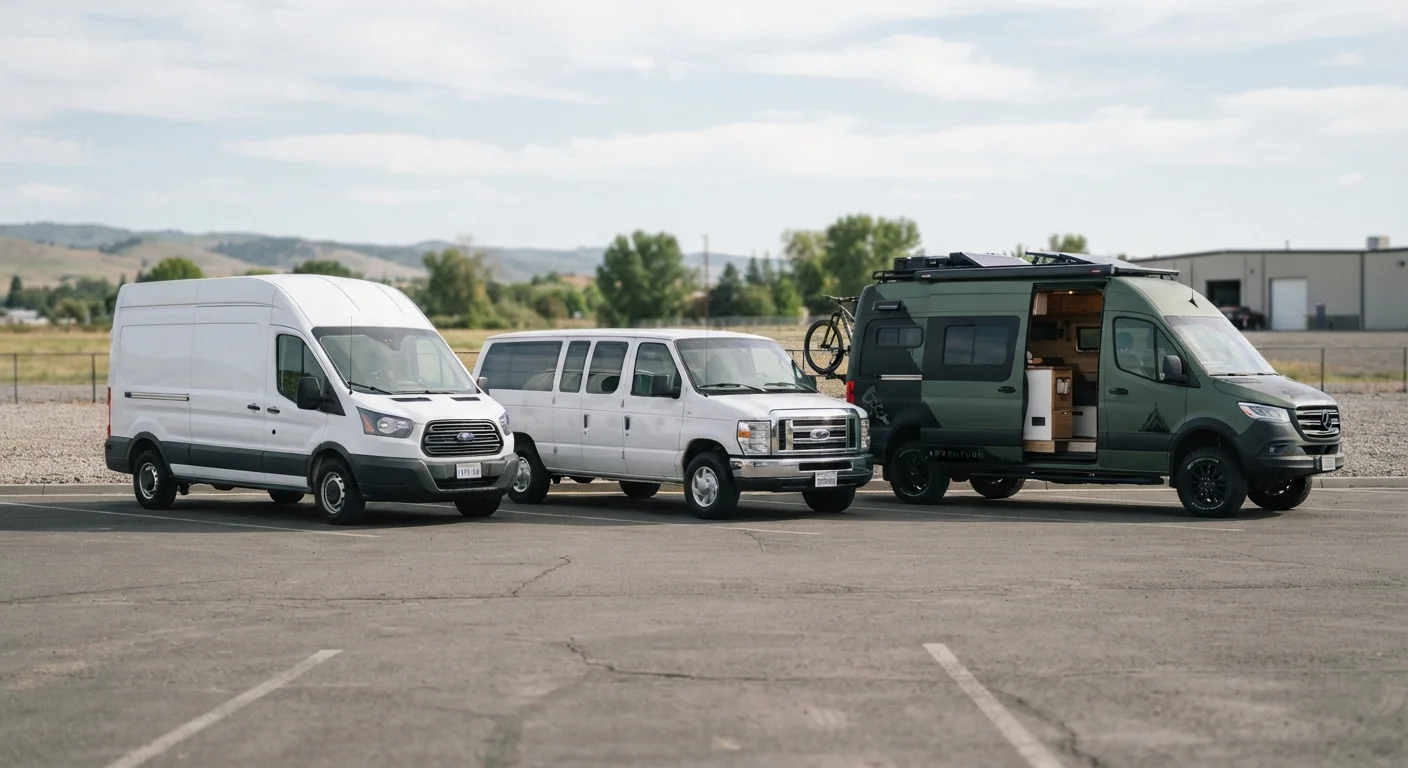
Van conversions add another layer. A high-roof cargo van with a built-out interior may be financed as an auto loan, a personal loan, or sometimes as a specialty vehicle, depending on whether the conversion was done by a manufacturer or a private builder. Lenders want to know the vehicle has a clear title and a verifiable market value.
What lenders look at when you apply
Lenders evaluate several factors before setting a rate or approving a loan.
- Credit score and history. A higher score signals lower risk and generally produces a lower rate. Most lenders want to see on-time payment history and manageable existing debt.
- Debt-to-income ratio. This compares your monthly debt payments to your gross monthly income. A lower ratio tells the lender you have room to take on a new payment.
- Down payment. Putting more money down reduces the loan-to-value ratio, which is the loan balance divided by the vehicle's value. A lower ratio reduces lender risk and may improve your rate.
- Vehicle age and condition. Many lenders cap loans on older units. A 2005 diesel pusher may not qualify for a secured RV loan at all banks, in which case a personal loan becomes the alternative.
- Loan term. Longer terms mean smaller monthly payments but more total interest. Shorter terms cost more each month but less overall.
The real costs of owning an RV is worth reading alongside any financing decision, because the monthly loan payment is only one of several ongoing expenses.

Loan sources and how they compare
You have a few places to look for financing before or during the buying process.
Banks and credit unions often have dedicated recreational vehicle loan products. Credit unions in particular tend to offer competitive rates to members. Getting pre-approved through one of these sources before you shop gives you a concrete number to compare against dealer offers.
Dealer financing works similarly to dealer financing for cars. The dealer submits your application to one or more lenders and presents you with an offer. This is convenient, but the dealer may earn a fee for arranging the loan, which can be built into the rate. How dealer financing compares to direct lending covers this dynamic in more detail.
Specialty RV lenders focus exclusively on recreational vehicles and sometimes approve loan amounts or vehicle types that general banks pass on. They may also have programs for full-timers or vehicles used part-time as rentals, though terms and eligibility vary widely.
If you are still deciding whether to buy at all, renting versus buying an RV lays out the financial and practical tradeoffs of each path.
Get pre-approved before you shop
Applying for pre-approval at a bank or credit union before you visit a dealer costs nothing and gives you a real rate to compare against. Dealers sometimes offer competitive financing, but you can only know that if you have another number in hand. Pre-approval also clarifies your budget before you fall in love with a vehicle.
Questions to ask before you sign
Once you have a loan offer in hand, a few specific questions help you understand what you are actually agreeing to.
- What is the annual percentage rate (APR)? The APR includes the interest rate and certain fees, making it a more complete cost comparison than the rate alone.
- Is there a prepayment penalty? Some RV loans charge a fee if you pay off the balance early. If you plan to pay ahead, this matters.
- What happens if the vehicle is totaled? Loan balances on RVs can exceed the vehicle's insured value, especially early in the loan. Gap coverage, which pays the difference, is worth understanding before you need it.
- How is the title held? Confirm that a lien is recorded correctly and that you understand the process for obtaining a clear title once the loan is paid off.
Financing is one piece of a larger picture. What to inspect before buying a used RV and RV insurance basics address the other two decisions that typically happen around the same time as a purchase.
This article is for general informational purposes only and is not financial, tax, or legal advice. Loan terms, rates, and eligibility vary by lender and individual circumstances. Consult a licensed financial professional before making borrowing decisions.